

The story of a digital lab rat, two stickers, and a subscription that still hasn’t paid for itself.
I started out of necessity. That’s all there is to it.
Around mid-2023, while everyone on the internet seemed to have discovered the secret to making money from home, I was trying to figure out whether any of it was real or whether we were all being taken for a ride with remarkable creativity.
Instagram was full of people claiming you could make $500 in a single day, pay your rent with social media income, and forget about working for someone else. Some showed off their earnings. Others talked about financial freedom. And a few looked as though they were one post away from buying their own island.
And I thought: Can it really be that wonderful?
Because needing money is one thing. Believing money will magically appear because someone wrote a promise in giant letters over a photograph is quite another.

That’s how my adventure began. Not as a guru, a digital marketing expert, or one of those people who sit in front of an immaculate computer explaining how to change your life in seven days.
I started out as what I am: a digital lab rat.
The Rat and Her Gadgets
To understand the scale of my operation, you need to know that my relationship with technology has never exactly been a love story.
My previous computer died. My phone was another disaster. Then I was given a laptop, which I still use today. With 4 GB of RAM and 64 GB of storage, it seems to have been designed for children doing their homework.
But here we are: the laptop, my phone, and me, trying to conquer the digital world.
All right, conquering the world might be a little ambitious. Getting these devices to stop driving me up the wall would already count as progress.
Naturally, I had plans. If I started making all that money everyone promised, I would buy cutting-edge technology. A powerful computer, a decent phone, and everything else I needed to work like someone who actually knew what she was doing.
The money-making part was still pending.
Around that time, artificial intelligence started popping up everywhere in my searches. ChatGPT, design tools, automation, and a whole vocabulary of terms suggesting that the future had arrived.
Apparently, the future hadn’t checked my computer’s specifications.
Don’t get me wrong. I’m not completely hopeless with technology. It’s just that technology and I were never close friends. During my years working for companies, I had seen commercial campaigns, product launches, and marketing strategies. I knew those things existed, but since they weren’t my area of work, I couldn’t have cared less. Everyone had their own business to worry about.
Until I had to learn all of it myself.
And you know the saying: if you can’t beat the enemy, join them.
The Jobs That Paid… Supposedly
My first stop was microtasking, survey apps, and platforms promising to pay people for completing small tasks from home.
It sounded reasonable. A little spare time, a few activities, and some extra income. What could possibly go wrong?
Well, for starters, I could spend more time watching ads than doing anything remotely worthwhile.
Then came the conditions, the minimum withdrawal amounts, and the endless need to keep accumulating tiny rewards. In my experience, the whole thing ate up time, and I never managed to get paid.
It was like having a job where the company keeps telling you that payday is just around the corner, but first you have to complete one more task.
And another.
And one more after that.
By then, I had learned a lesson: just because an app displays a balance on your screen doesn’t mean that money will ever reach your bank account.
But my curiosity was still alive. If one thing didn’t work, I would try something else.
So I kept going.
The Woman Who Bought a House
Then came design, Canva, and Print on Demand, a business model that lets you sell products featuring your designs without having to manufacture and store everything yourself.
That’s when I came across one of those stories that makes your scrolling thumb come to a sudden halt.
A woman claimed she had bought a house by selling on Etsy. She also said she had made $4,000 during a single month while on vacation.
Four thousand dollars.
While I was still trying to understand how these platforms worked, this woman apparently had the luxury of going on vacation and coming back with what looked like a decent monthly income.
And I thought: Could this be real?
I had no way of verifying her story. I didn’t know how long it had taken her to build her business, how much she had invested, or how much of her income came from selling products versus selling courses.

But her story made me curious. If she could do it, I wanted to understand how it worked.
Later, I discovered that Etsy wasn’t available for opening a shop from my country under the same conditions available to her. Another detail that rarely gets much attention in success stories: not every platform is available to everyone.
That’s when I began to understand that one person’s extraordinary story isn’t necessarily a formula anyone can reproduce.
My Empire of Two Stickers
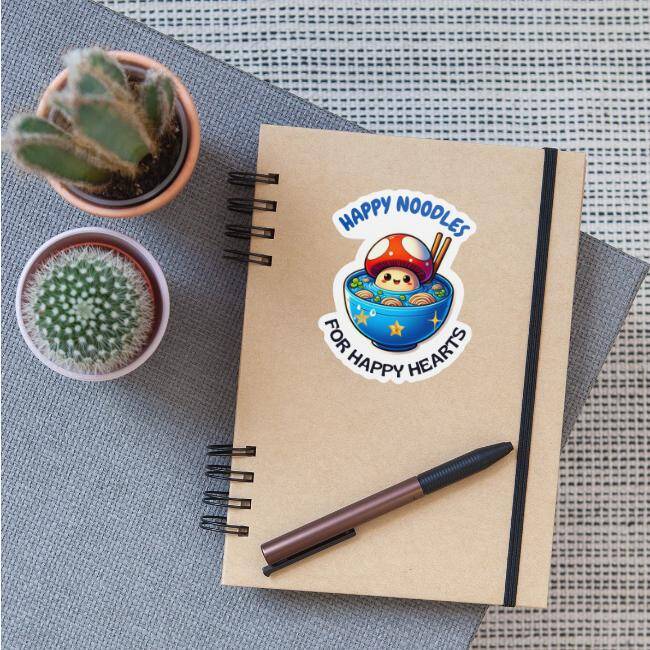
According to the internet experts, you don’t need to be a professional designer to sell products. You just need ideas, a willingness to learn the tools, and a market.
Perfect.
I’m not a professional designer either. I’ve never been particularly good at drawing. But I figured that if they said it wasn’t essential, who was I to argue with the experts?
So I jumped into the business.
I sold two stickers on Spreadshirt. I think it was more than two years ago.
Two.
Not two thousand. Not two hundred. Two.
I don’t know whether my designs were bad, nobody saw them, the competition was too fierce, or the universe decided to protect humanity from my business skills. What I do know is that I haven’t bought a house with the proceeds.
At this rate, I’ll have to settle for paying the internet bill.
Of course, two sales aren’t enough to determine whether a business can work. You have to consider visibility, demand, products, pricing, and plenty of other things. But that’s exactly the point: there was a lot to learn, even though the ads insisted you didn’t need to be a designer or have any technical knowledge.
Making it easy to create a product is one thing. Getting someone to buy it is another.
Being able to open a store in five minutes doesn’t mean you’ll have customers ten minutes later.
The Gurus Have Arrived on Pinterest Too
For a while, I thought extraordinary income claims were mostly an Instagram thing. Then I discovered Pinterest.
And I learned that mosquitoes have accounts there too.
They’re everywhere. Like mosquitoes during the rainy season. Someone really ought to fumigate those accounts.
Make $1,000 with ChatGPT. Earn $10,000 a month with a blog. Copy and paste links to make hundreds of dollars a day. Find remote jobs with no experience. Monetize your social media. Quit your job and live off the internet.
Different platform, different number, different face in the ad. The repertoire is practically endless.
Some ads seem determined to cram every possible piece of information into a single image. Huge lettering, numbers everywhere, colors fighting for my attention, and promises that need an entire page just to explain the conditions.
All while telling me about marketing strategies, sales funnels, search rankings, and advanced techniques for converting visitors into buyers.
And I find myself wondering: if your strategies are so extraordinary and you make so much money, couldn’t you hire a decent graphic designer to put together a proper ad?
You don’t need to spend a fortune on an agency. But it might help if someone decided which information actually matters and stopped putting seventeen font sizes on the same poster.
You want to teach me how to sell online, yet you haven’t even convinced me to keep looking at your ad.
Where exactly is the conversion strategy? In the typeface taking up half the screen? In the five colors fighting for my attention? Or in that “MAKE $10,000 A MONTH” headline that gets more attention than the information about what you’re actually offering?
Maybe the method works brilliantly. I don’t know. But the advertising certainly isn’t helping me trust it.
And if those ads were made with artificial intelligence, the question becomes even more entertaining. We don’t know who designed them or which tools they used, but having access to a tool doesn’t mean you know how to use it well.
The Secret Method That Explains Everything
There’s something about these sales strategies that catches my attention.
First, they tell you that you don’t need knowledge, experience, or technical skills. You just have to follow a few steps.
But when the results don’t show up, the explanations begin: you’re missing a strategy, you need to learn how to sell, understand your audience better, or review how you’re applying the method.
And, of course, another course, program, or mentoring package appears to solve the problem.
The promise was that anyone could do it. When it doesn’t work, apparently you’re the one who didn’t know how to do it.
There’s nothing wrong with admitting that running a business requires learning. That’s perfectly reasonable. The problem is presenting an activity as almost automatic, then blaming the buyer entirely when the promised results fail to materialize.

On Pinterest, I’ve read comments from people asking how to apply certain methods and others saying they paid to learn, only to end up disappointed. I’ve also seen criticism on Instagram directed at sellers whose customers complained that their methods didn’t work or that they took too long to answer messages.
I can’t know what happened in every case, and I can’t claim that all those sellers are scamming their customers. But I do think there are legitimate questions to ask when someone charges money to teach a strategy.
What evidence do they offer to support their claims? Do they explain the method’s conditions and limitations? Are they willing to respond when things don’t turn out the way the buyer expected?
Selling knowledge is legitimate. Creating expectations that a product cannot guarantee is another matter.
Quit Your Job After Looking at Three Pins
“Businesses that will make you quit your job.”
That one shows up, too.
And I’d like to know who’s actually handing in their resignation after seeing three Pinterest pins and a video of someone pointing at numbers on a screen.
Because they aren’t just selling you a business. They’re selling you the fantasy of escaping your current life.
Tired of your boss? Quit.
Sick of earning a salary? Start a business.
Want freedom? Buy my method.
All before explaining how much it costs to keep the business running, how long it might take to generate income, or what happens if you can’t find enough customers.
Quitting a job is a serious financial decision. It shouldn’t depend on an ad with giant lettering.
Besides, many of these businesses involve selling digital products, publishing content, or doing affiliate marketing. Those are legitimate activities, but they require work, learning, and the ability to attract customers.
They sell you the possibility of no longer working for someone else, and then you discover that you have to work for your own business, find customers, and figure out how to get paid.
Apparently, financial freedom comes with its own to-do list.
The Blog and the Wonderful Money-Making Machine
Then came Pinterest, blogging, and all those conversations about monetizing a website.
Recently, I read a reflection by someone who had started a blog around 2015 as a hobby. Over time, they acknowledged that monetizing it had become difficult, especially because of SEO, competition in certain niches, and the challenge of attracting traffic.
It made me think about all the work that gets left out of success stories.
Writing an article doesn’t guarantee anyone will find it. Getting visitors doesn’t mean readers will buy something. And traffic doesn’t guarantee that your income will exceed your expenses.
You have to write for an audience, work on search rankings, update your content, compete with other websites, and find a monetization strategy that makes sense.
All of that takes time. And there’s no guarantee it will become profitable.

But on Pinterest, all it takes is an image promising ten thousand dollars a month to make starting a blog look pretty much like installing an ATM on the internet.
I’m still learning. The digital world keeps changing, platforms change their rules, and what worked yesterday may stop working tomorrow.
I don’t claim to have mastered the whole thing. I’m not even close.
What I have learned is that having a website and publishing articles is only the beginning. The rest of the work doesn’t disappear just because someone left it out of an ad.
ChatGPT, the Gurus’ Capitalist Partner
And now we get to one of my favorite parts.
According to the ads, you can make up to a thousand dollars with ChatGPT.
A thousand dollars.
I’ve been using this tool for a while to work on Kesef Project, develop content, experiment with designs, and build a website. I’m not an artificial intelligence expert, and I’m still learning how to use it. But so far, the money has been flowing in only one direction.
I pay the subscription.
So while the internet assures me that people are making thousands of dollars thanks to artificial intelligence, I’m still waiting for someone to tell me where to collect mine.
Apparently, ChatGPT is the capitalist partner of every internet guru. They all seem to be making money with it, except for the lab rat paying the subscription.

And we don’t know how much each person in those ads actually earns, what they sell, how much they invest, or how much of their income comes from selling their own courses. Not everyone using artificial intelligence to make money is lying.
ChatGPT can help develop ideas, write, organize information, and complete tasks. But it cannot guarantee customers, sales, or income simply because you open a conversation.
A tool can make the work easier. The business, however, still has to be built.
So, Is Everything a Scam?
No. There are legitimate businesses, people who make a living from their blogs, designers who sell their products, and entrepreneurs who do well with affiliate marketing. There are also useful courses and professionals who charge for teaching what they know.
The problem isn’t that people sell knowledge. It’s how easily some ads present extraordinary results without adequately explaining what goes into achieving them.
I started out of necessity. I’ve tried different options, wasted time, and learned to use tools that had never interested me before. I’ve worked with Pinterest, created products, and built a website.
I haven’t earned the income I expected, and I’m not going to invent a success story just to make my experience sound more interesting.
My two stickers are still two stickers. My website is still a work in progress, and I’m still learning. That doesn’t prove everything is useless, but it doesn’t turn hard work into a guarantee of profitability either.
Because, seriously, where is all that money people supposedly make without any effort? Even becoming a drug lord, a thief, or a trafficker comes with risks. And none of those occupations comes with a success guarantee or customer support.
The Rat Is Still in the Lab
I don’t regret experimenting. I’ve developed skills I didn’t have when I started, and I’ve discovered a world I barely cared about before.
I still don’t know everything. I don’t pretend to.
Now, when I come across an online business opportunity, I try to look beyond the flashy numbers. I want to know how it works, what kind of work it requires, and what its realistic prospects are.
I don’t know whether I’ll ever turn Kesef Project into a profitable business. I’m working on it, learning, and trying different possibilities.
But I don’t need to pretend I’ve already made it to acknowledge what I’ve learned along the way.

I’m still here, with my four-gigabyte laptop, my phone running out of patience, and a subscription that still hasn’t paid for the high-end technology I thought I’d be buying by now.
Because ignorance isn’t a business model. Although, apparently, some people have figured out how to monetize it.
And not the ignorance of the seller.
Kesef Project