

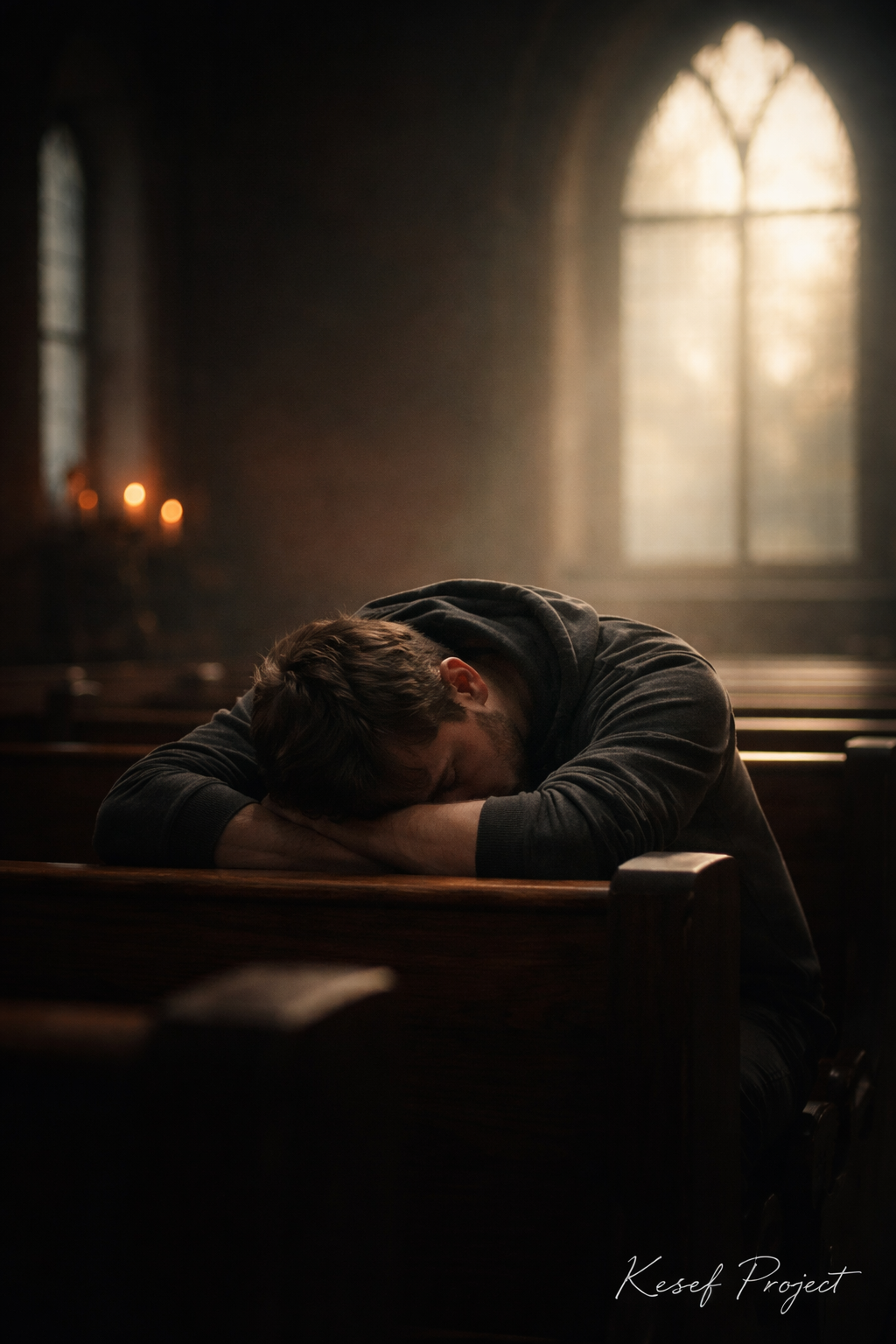

Spiritual drowsiness is not rest. Sometimes, it is neglect.
In the Christian life, we rarely wake up one morning and decide to stop paying attention to God. More often, it happens quietly. We begin to settle into our routines, distractions gain ground, and exhaustion does the rest. We put off the things we know we need to attend to, and over time, we stop noticing how far we have drifted.
We don't always fall all at once. Sometimes, we slowly fall asleep while believing everything is still as it should be.
Scripture offers enough examples to make us look at this more carefully.
David was supposed to be at war, but he stayed home. One afternoon, while walking on the roof of his palace, he saw Bathsheba. What followed was not simply the result of a careless glance. Before the consequences became visible, David had already stepped away from the place he was meant to occupy. His story reminds us that a fall can begin long before we do something others can point to.
On another occasion, David entered Saul's camp while the king and his men were asleep. No one noticed him, and the camp's security was compromised without those responsible for protecting it realizing what was happening. Samson also fell asleep, this time in Delilah's presence, without fully understanding the danger he was in. When he awoke, he had lost what he had taken for granted.
These accounts share something in common: danger does not necessarily disappear just because we stop paying attention to it. Sometimes, while we let our guard down, circumstances continue to unfold.
What we neglect during a season of ease can catch up with us when we are least prepared.
Yet Scripture also presents a situation we must distinguish from neglect. Elijah lay down beneath a broom tree because he was exhausted, overwhelmed, and afraid. God did not treat him as a rebellious man for needing rest. He allowed him to sleep, provided food and strength, and then set him on his way to continue his work.
That distinction matters. Not every tired Christian needs a warning. Some need to stop, regain their strength, and receive the care necessary to get back on their feet.
Confusing exhaustion with spiritual neglect can lead us to judge as a lack of faith what actually calls for rest and care. But we can make the opposite mistake, too: calling everything exhaustion when we have stopped attending to what matters, even though we know we have been putting it off for far too long.
The story of Sisera introduces another dimension of the problem. After fleeing the battle, he arrived at Jael's tent, accepted what she offered him, and fell asleep, convinced he was safe. He never woke up. Peter, meanwhile, fell asleep in Gethsemane when Jesus had asked him and the other disciples to watch and pray. Hours later, under pressure and fear, he denied knowing his Master.
Peter did not need to prove that he could stay awake indefinitely. He needed to be prepared to face what was coming. His story reveals the distance that can exist between our good intentions and the strength we believe we have when the moment comes to put them to the test.
Eutychus also fell asleep while Paul was preaching late into the night. Sitting by a window on the third floor, he fell and had to be brought back to life. The account does not present his sleep as a spiritual failure; rather, it reminds us what can happen when exhaustion overtakes us. For that reason, we should not use all these episodes as though they teach exactly the same lesson.
Being present does not necessarily mean being attentive. We can be in the right place, hear the right words, and even have good intentions without recognizing how much we need to prepare for what lies ahead.
The parable of the ten virgins takes the matter a step further. All ten grew drowsy and fell asleep while waiting for the bridegroom. The difference was not that some never grew tired, but that not all of them were ready when the decisive moment arrived.
Spiritual drowsiness does not always appear in an obvious form. It can be mistaken for comfort, exhaustion, or a routine we keep following without stopping to examine what is happening within us. The point is not to live in a constant state of alarm, but to recognize when we have stopped paying attention to what sustains our faith.
Today, we face a particular difficulty: distraction is literally within arm's reach.
We carry our phones everywhere. Notifications interrupt prayer, work spills into the time meant for rest, and there is always something else to watch, hear, or comment on. We can spend hours consuming information and reach the end of the day without finding a few minutes of silence to examine our thoughts, our decisions, or our relationship with God.
This is not about condemning technology or pretending that every form of entertainment is harmful. The problem begins when distraction stops being something we choose and becomes our habitual way of avoiding silence. Even moments that could help us reflect end up filled with something else demanding our attention.
Perhaps one of the most common forms of spiritual drowsiness today is being so occupied with looking outward that we barely notice what is happening within us.
Prosperity can contribute to this loss of attentiveness, too. In Job 21:9–13, Job describes people who live securely, prosper, and appear to enjoy lives free from major troubles. Abundance itself is not the problem. The danger arises when comfort makes us forget our dependence on God, as though having our lives in order meant we no longer needed to examine them.
There is nothing wrong with enjoying what we have. The concern is allowing what gives us a sense of security to take the place of the One who provides it.
Today's believer has not necessarily decided to reject God. Sometimes, what happens is less obvious: faith gradually gets pushed to the margins of the day. Prayer is postponed until later; reading Scripture is put off until there is time; convictions that once stirred us begin to feel less urgent.
There is no conscious decision to abandon everything. We simply stop tending to it.
And what is not nourished eventually grows weak.
Spiritual drowsiness can also be seen in a sensitivity that gradually fades. We pay less attention to our convictions, examine less carefully what we allow into our minds, and struggle to recognize when comfort has begun to turn into complacency. We do not always notice the change as it happens. Often, we discover it when a situation forces us to face something we have been avoiding for a long time.
The danger lies not only in doing something we know is wrong. It also lies in becoming so accustomed to postponing what matters that we no longer feel the urgency to address it. We do not need to be convinced that God does not exist if we end up living as though we never have to stop and listen to Him.
But this column is not about living in fear of every distraction or interpreting every sign of tiredness as spiritual failure. It is about waking up, recovering our ability to pay attention, and honestly recognizing where we stand.
Faith was never meant to run on autopilot.
Staying spiritually awake means noticing the changes taking place within us before they become impossible to ignore. It means refusing to let constant busyness decide what deserves our attention and what can wait. And when necessary, it also means acknowledging that we are exhausted and allowing God to restore us before we continue.
Perhaps we need to pray again without keeping an eye on our phones. Maybe we need to open Scripture once more, not to complete a routine, but to listen with a willingness to hear what we have stopped considering. Or perhaps the first step is admitting that we have been neglecting our spiritual lives longer than we care to acknowledge.
Each situation calls for a different response. Not everything can be resolved by doing more or imposing another obligation on ourselves. We must first recognize what is happening to us; otherwise, we can fill our days with religious activities and still fail to pay genuine attention to our relationship with God.
Waking up begins right there: when we stop justifying our neglect and dare to acknowledge it. Not so that we remain trapped in guilt, but so that we can begin tending to what we have left unattended.
We cannot wake up from something we refuse to acknowledge.
“Awake, you who sleep,
Arise from the dead,
And Christ will give you light.”
— Ephesians 5:14
Kesef Project