

I was listening to a reflection about people who only seem to appear when they need something. As I listened, I found myself remembering a moment from years ago that has never really left me. At the time, I was listening to a sermon about Naaman. The message was about process, obedience, and the battles that often remain hidden behind the things people admire. Yet what stayed with me the most was not something the preacher said. It happened during a moment of ministry and prayer.
A thought hit me with a force I have never forgotten: "Don't seek what I can give you. Seek Me."I remember sitting in silence. And I remember the tears.Not because those words were harsh. But because they were true. It was easy to remember the times I had asked for direction, provision, or answers.Far more difficult was asking myself whether I was truly seeking Him. Years later, that moment came back to mind and led me to notice something that had been there all along.The Bible speaks about bread more often than we tend to realize. We see it falling onto the desert floor. We see it multiplying among a crowd.We see it become part of a conversation that would change a woman's life. And we find it in the prayer Jesus taught His disciples. Different stories. Different people.Yet the same question seems to run through all of them:
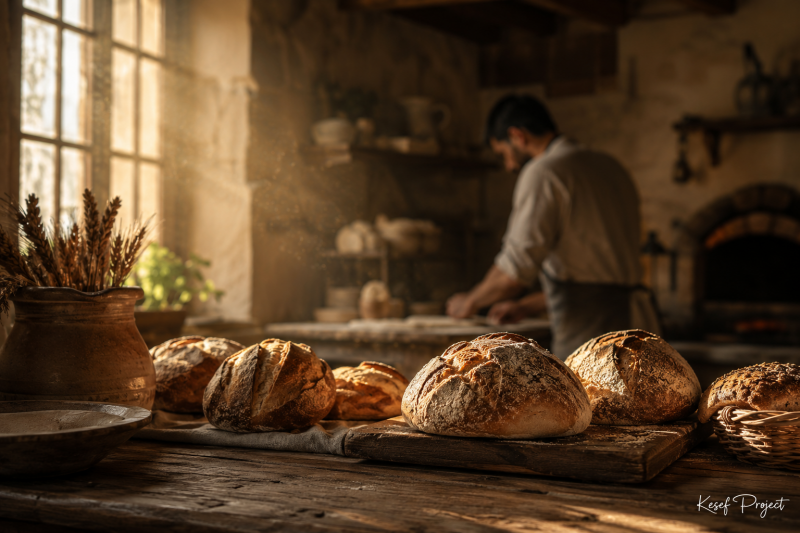
Are you seeking the bread or the Baker?
John 6:26–27 | When the Miracle Is No Longer Enough
The crowd had eaten until they were satisfied. Thousands of people had watched a few loaves multiply in the hands of Jesus. The baskets came back full. The hunger was gone. Their immediate need had been met. And the next day, many of them came looking for Him again. At first glance, that sounds like good news. After all, they were searching for Jesus. Yet the response they received was a confrontation.

You are looking for Me, not because you saw the signs I performed but because you ate the loaves and had your fill. Those are powerful words.
Jesus was not rejecting the crowd. Nor was He condemning the miracle.
He was the One who had multiplied the bread. The problem was not the bread.
The problem was that they had witnessed the miracle without understanding what the miracle was pointing to. They had received the provision, but they were not interested in the Provider.
If Jesus had stopped multiplying bread that day, how many would have continued walking behind Him? It's a difficult question.
Because it forces us to examine our own motives.
What would happen to our pursuit of God if the answers we are waiting for never came? What if the miracle took longer than we expected? Would we still seek Him for who He is? Or only for what He can give us? The crowd was confronted that day. And if we're honest, so are we.
Matthew 15:21–28 | The Woman Who Refused to Leave the Table
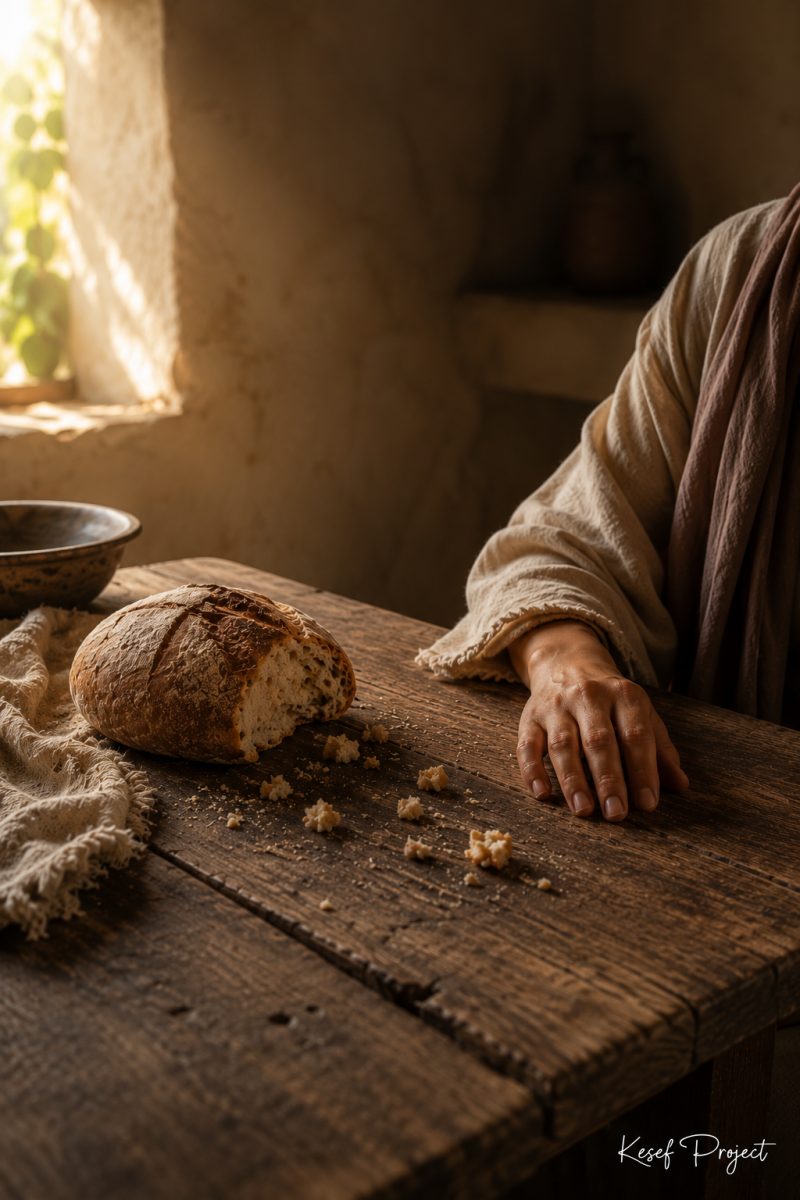
The Canaanite woman came looking for a miracle. Her daughter needed help. The need was real. The urgency was real. And the conversation took a turn few people would have expected. Jesus spoke about the children's bread. The scene is impossible to ignore. here is a table. There is bread. And there is a woman pleading for her daughter. Many would have walked away. Many would have taken offense. Many would have allowed pride to speak louder than faith. She didn't. She stayed. And then she replied:
"Yes, Lord, yet even the dogs eat the crumbs that fall from their master's table."
Every time I read those words, I pause. Because this story is not about a woman settling for crumbs.
The story ends with her daughter healed. It ends with a miracle. But before the miracle, something extraordinary happens. She was more interested in Jesus than in protecting her pride.
As she spoke about crumbs, I couldn't help thinking about how often we do the opposite. We have received whole loaves. Answers we once prayed for.
Doors that once seemed permanently closed. Provisions that once felt impossible. And over time, we stop seeing them as gifts and begin treating them as ordinary. Some people receive much and still remain dissatisfied. Then this woman appears. Willing to travel the distance. Willing to humble herself. Willing to keep asking. Willing to remain. Because she understood something many of us are still learning. A crumb that comes from Jesus still comes from Jesus.
Faith is not always revealed when we receive what we hoped for. Sometimes it is revealed in the way we remain while we wait. What carries more weight in us?Faith or pride? The pursuit of God or our expectations?
Do we remain near the table when life unfolds differently than we imagined?
Exodus 16 | When Manna Stopped Being Remarkable
Every morning, the people woke up in the middle of the wilderness. The sand was still there. The uncertainty was still there. But so was the manna.
It was the provision for that day.
Not for a week. Not for a month. For that day.
They gathered it, prepared it, and ate it. The next morning, it appeared again.
Day after day, week after week, month after month.
Until something very human happened: they became accustomed to the miracle. What had once inspired wonder began to feel ordinary. And eventually, bread was no longer enough. The complaints came, the comparisons began, and they started looking back at Egypt with a nostalgia that did not reflect what they had actually experienced there.
And it is difficult not to see ourselves in that story.

Familiarity can make a blessing feel ordinary.
Many times, we do not stop valuing something when we lose it. We stop valuing it when it becomes familiar. Health, family, work, opportunities, even God's provision. We become accustomed to receiving them, and little by little, what once stirred gratitude begins to feel insufficient.
Perhaps that is why the manna could not simply be stored for the following day. God had instructed them to gather what they needed for each day. The provision was not meant to become a reserve that allowed them to stop depending on Him.
And perhaps that is one of the deeper lessons we can take from the story:
Don't depend on the bread. Depend on the One who provides it.

Daily bread teaches us to trust beyond what we can store.
Matthew 6:11 | Today's Bread
After the crowd, the crumbs, and the manna, bread appears once again. This time, in a prayer:
“Give us this day our daily bread.”
Not tomorrow. Not for the next ten years. Today.
It is an interesting thought. We spend much of our lives trying to control the future. We want answers for everything and certainty for every step. We want to know how the story ends before we are willing to walk through it.
Yet Jesus taught His disciples to ask for their daily bread.
Because bread has limits. It is consumed, it can become scarce, and eventually it can run out. Even manna could not be turned into a reserve for controlling the following day.
But the God who provides remains.
A Question Still Waiting for an Answer
There was a moment when I had to confront something in my own heart. I was looking for answers, waiting for provision, asking for what I needed. And in the middle of all that, I was confronted with a question I have never forgotten:
“Why are you seeking My benefits? Seek Me.”
Not because I have stopped needing answers. Not because I have stopped needing provision. Not because I have stopped needing bread.
But because I am still learning that behind every provision there is something more valuable than what we receive: the One who provides it.

The greatest gift is knowing the One who gives it.
The crowd received bread, but was confronted with something that went beyond their hunger. The Canaanite woman valued even the crumbs. Israel received manna every morning until what had once been a miracle became part of their routine.
And Jesus taught us to ask for our daily bread.
Different stories. Different centuries. The same human heart.
Perhaps that is why bread appears again and again throughout Scripture. Not so that our attention would stop at what we receive, but so that our eyes would turn toward the One who provides it.
When I pray, when I wait, when I receive, in seasons of abundance and also in seasons of scarcity, the question remains:
Am I seeking the bread or the Baker?
by Kesef Project